
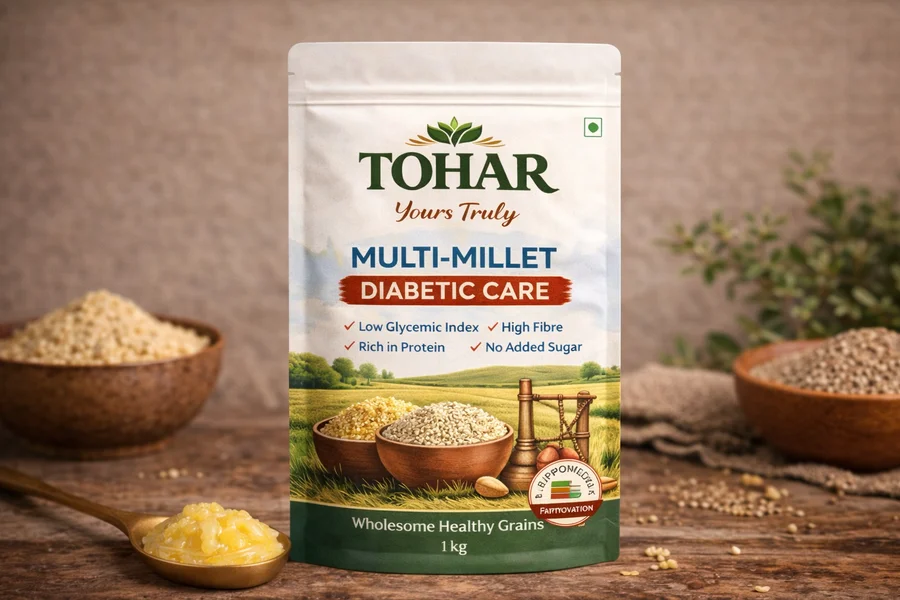
Care
Multi-Millet Blend
A low glycemic, high fibre blend of millets — no added sugar, made for everyday blood-sugar-conscious eating.

A low glycemic, high fibre blend of millets — no added sugar, made for everyday blood-sugar-conscious eating.
"Shree Anna" — the honoured grain.
Millets are among the oldest cultivated grains in the world, a staple of Indian diets for centuries before rice and wheat became the default. India renewed that recognition in 2023, naming them "Shree Anna" and successfully proposing the UN's International Year of Millets.
India is the world's largest millet producer, accounting for roughly 38% of global output — grain that fed generations long before it became a modern wellness trend.
Our Multi-Millet Blend is our way of bringing that grain back to an everyday plate — mixed simply, with no added sugar, for anyone watching their blood sugar without giving up a proper meal.
General footage of pearl millet cultivation — not Tohar's own farm, but the same crop family behind our millet blend.
Typical values for a multi-millet blend, per 100g — general reference figures for this food category, not a lab-tested analysis of this specific batch. Get in touch if you'd like more detail.
| Nutrient | Typical Amount |
|---|---|
| Energy | ~380 kcal |
| Protein | ~11 g |
| Carbohydrates | ~73 g |
| Dietary Fibre | ~9 g |
| Fat | ~4 g |
| Iron | ~1 mg |
Backed by real research.
Millets have a meaningfully lower glycemic index than rice and refined wheat, releasing energy more gradually.
Published research links regular millet consumption to meaningful reductions in fasting and post-meal blood glucose.
A strong source of dietary fibre, supporting digestion and helping you stay fuller for longer.
Most millets are naturally gluten-free, making this blend suitable for many gluten-sensitive diets.
Millets supply notable amounts of iron and magnesium, alongside B vitamins.
Drought-tolerant and low-input, millets carry a far lighter environmental footprint than rice or wheat.
General wellness information based on published nutrition research, including systematic reviews on millets and blood glucose — not medical advice. Speak with a healthcare professional for guidance specific to you, especially if managing diabetes.
Three everyday meals.